
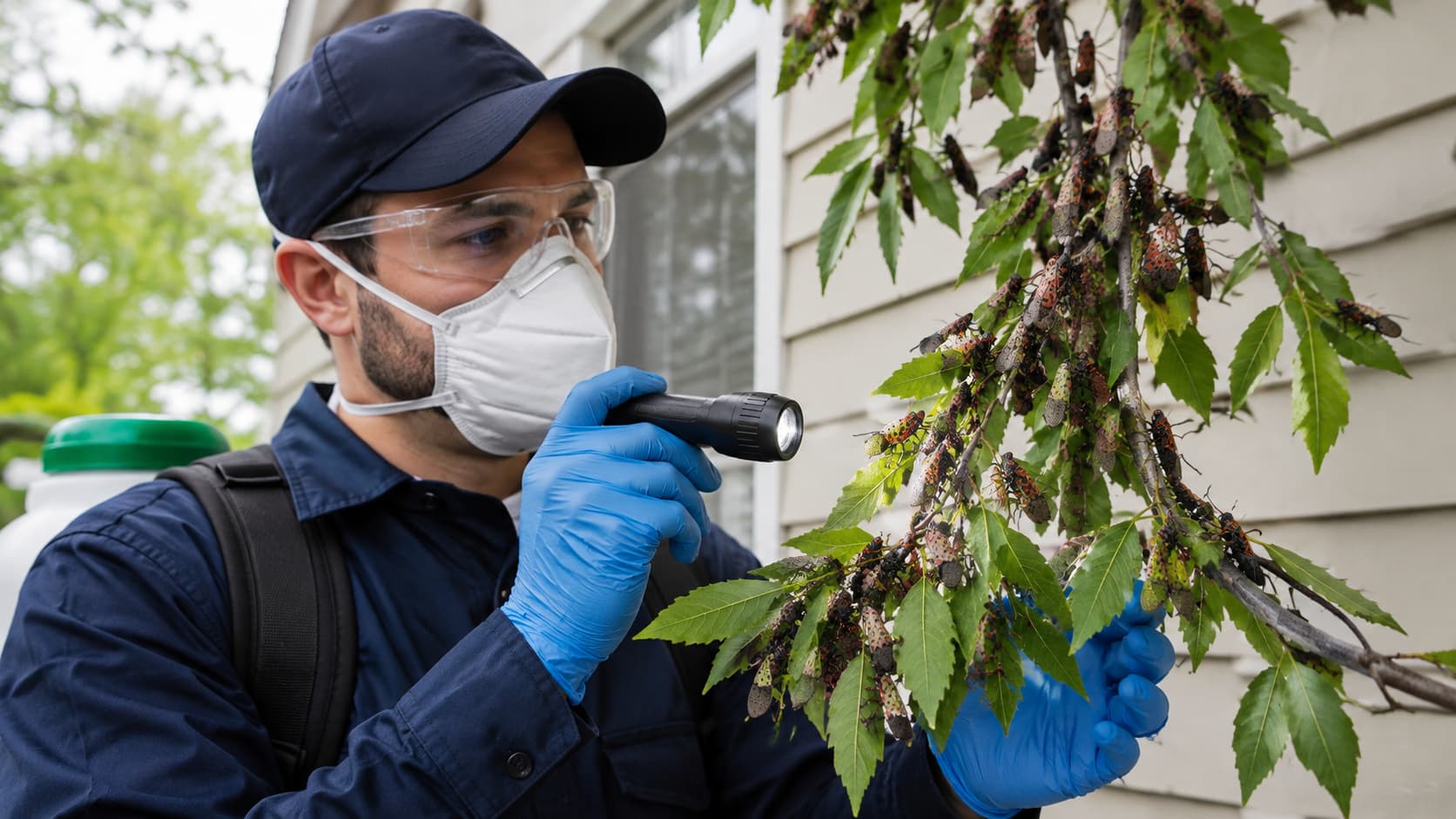
Box Elder Exterminator Service in Newark, OH (2026)
Box elder bugs become a familiar fall nuisance across Newark, gathering by the hundreds on sun-warmed exterior walls before squeezing through tiny gaps to overwinter indoors. While they do not bite or cause structural damage, large indoor populations leave behind stains and a persistent odor when crushed. A professional box elder exterminator service in Newark treats outdoor harborage areas, seals entry points, and helps reduce indoor sightings through the fall and winter months. To compare licensed providers near you, you can find a box elder exterminator in Newark before scheduling a treatment.
Licking County's abundance of box elder, maple, and ash trees gives these insects plenty of breeding sites, making seasonal swarms a predictable annual issue for many properties.
Why Box Elder Bugs Are a Problem in Newark
Seasonal Swarming: Box elder bugs cluster in large numbers on south and west-facing walls as temperatures drop in early fall.
Indoor Overwintering: Once inside, box elder bugs hide in wall voids, attics, and window frames until warmer weather draws them back out.
Staining and Odor: Crushed box elder bugs can leave reddish-orange stains on fabric and surfaces along with an unpleasant smell.
Tree Proximity: Properties near female box elder trees, which produce the seeds these bugs feed on, tend to see heavier activity.
How Professional Box Elder Control Works
Inspection and Entry Point Assessment
A technician inspects exterior walls, window frames, and foundation gaps to identify where box elder bugs are gathering and entering the structure.
Exterior Barrier Treatment
A residual insecticide barrier applied to siding, foundations, and sunny wall surfaces in late summer helps reduce populations before they attempt to move indoors.
Entry Point Sealing
Caulking gaps around windows, doors, siding, and utility penetrations is one of the most effective long-term steps to keep box elder bugs from entering.
Indoor Treatment
For bugs already inside, vacuuming and targeted treatment in wall voids and window tracks help clear existing populations without spreading stains.
Signs You Need Box Elder Control
Large clusters of black and orange bugs on exterior walls
Bugs appearing indoors near windows, attics, or baseboards in fall
Reddish-orange stains near window sills or light fixtures
Bugs re-emerging on warm days during winter months
Nearby box elder or maple trees on or near the property
Frequently Asked Questions
Are box elder bugs harmful to people or pets?
No, box elder bugs do not bite or transmit disease. They are considered a nuisance pest, though large populations can be unpleasant indoors.
When is the best time to treat for box elder bugs?
Late summer through early fall is the ideal window, since treating before bugs begin moving toward structures for winter is far more effective than treating afterward.
Will removing box elder trees stop the problem?
Removing female box elder trees can reduce local populations over time, but bugs often travel from neighboring properties, so exterior treatment remains the more reliable solution.