
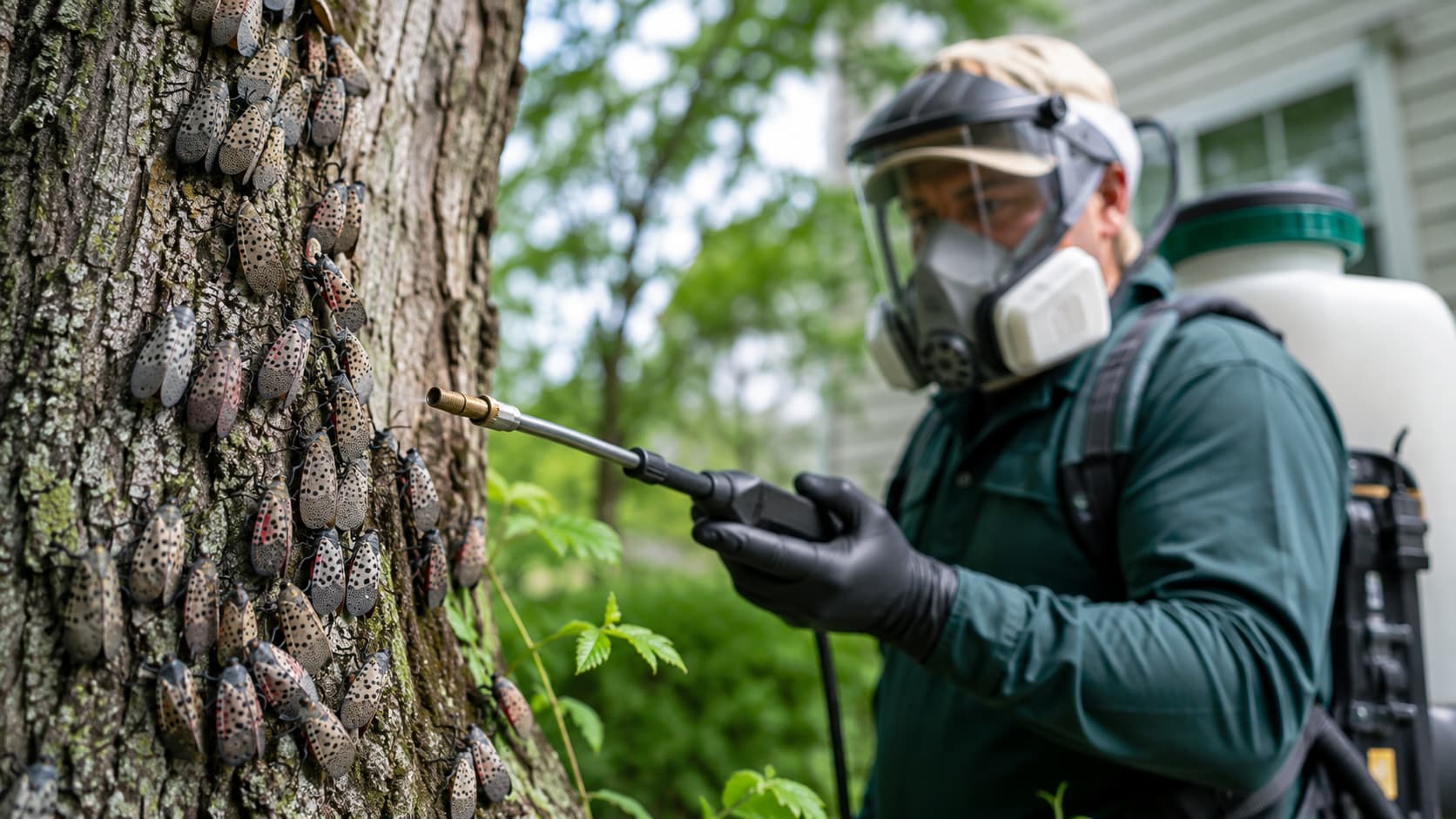
Lanternfly Exterminator Service in Newark, OH (2026)
The spotted lanternfly continues to spread across Ohio, and Newark properties with mature trees, vineyards, or landscaping are increasingly at risk. This invasive planthopper feeds on tree sap, weakens plants over repeated seasons, and leaves behind a sticky honeydew residue that attracts mold and stinging insects. A qualified lanternfly exterminator service in Newark identifies an infestation early, treats affected trees and structures, and helps limit further spread. To find a licensed provider near you, you can connect with a Newark pest control company that handles invasive insect treatment.
Because the spotted lanternfly is a tracked invasive species, fast identification and reporting matter as much as treatment itself. Ohio residents are encouraged to report sightings, and a professional exterminator can confirm identification while beginning treatment during the same visit.
Why Spotted Lanternflies Are a Problem in Newark
Tree Damage: Lanternflies feed heavily on tree of heaven, maples, and fruit trees, gradually weakening them season after season.
Honeydew and Sooty Mold: Their sticky excretion coats patios, vehicles, and outdoor furniture, leading to black sooty mold growth.
Agricultural Risk: Vineyards, orchards, and hop yards in Licking County are especially vulnerable to yield loss from large infestations.
Rapid Spread: Egg masses laid on trees, vehicles, and outdoor equipment make lanternflies easy to transport unintentionally between properties.
How Lanternfly Exterminator Services Work
Inspection and Identification
Technicians inspect trees, fences, and structures for adult lanternflies, nymphs, and egg masses, which appear as gray, mud-like patches on bark or flat surfaces.
Egg Mass Removal
Scraping and destroying egg masses before hatching season is one of the most effective ways to reduce next year's population on a property.
Insecticide Treatment
Systemic tree injections and targeted contact sprays are commonly used to kill feeding adults and nymphs, particularly on high-value or heavily infested trees.
Ongoing Monitoring
Because lanternflies migrate between properties, many Newark exterminators offer seasonal monitoring visits to catch new activity early, especially near tree of heaven growth.
Signs You May Have a Lanternfly Infestation
Gray, waxy egg masses on tree bark, fences, or outdoor equipment
Sticky honeydew residue on patios, cars, or plants
Black sooty mold developing on leaves or surfaces
Swarms of gray or red-winged insects on trees in late summer
Sudden dieback or stress in maples or fruit trees
Frequently Asked Questions
When is lanternfly season in Ohio?
Nymphs appear in late spring, adults are most active from July through October, and egg masses are laid in fall through early winter, making late summer the peak treatment window.
Can I treat spotted lanternflies myself?
Scraping visible egg masses helps, but large infestations usually need professional-grade insecticide or tree injection treatments to control populations effectively and safely.
Should I report lanternfly sightings in Newark?
Yes, Ohio encourages residents to report sightings to the Department of Agriculture, since early detection helps track and slow the spread of this invasive species.