
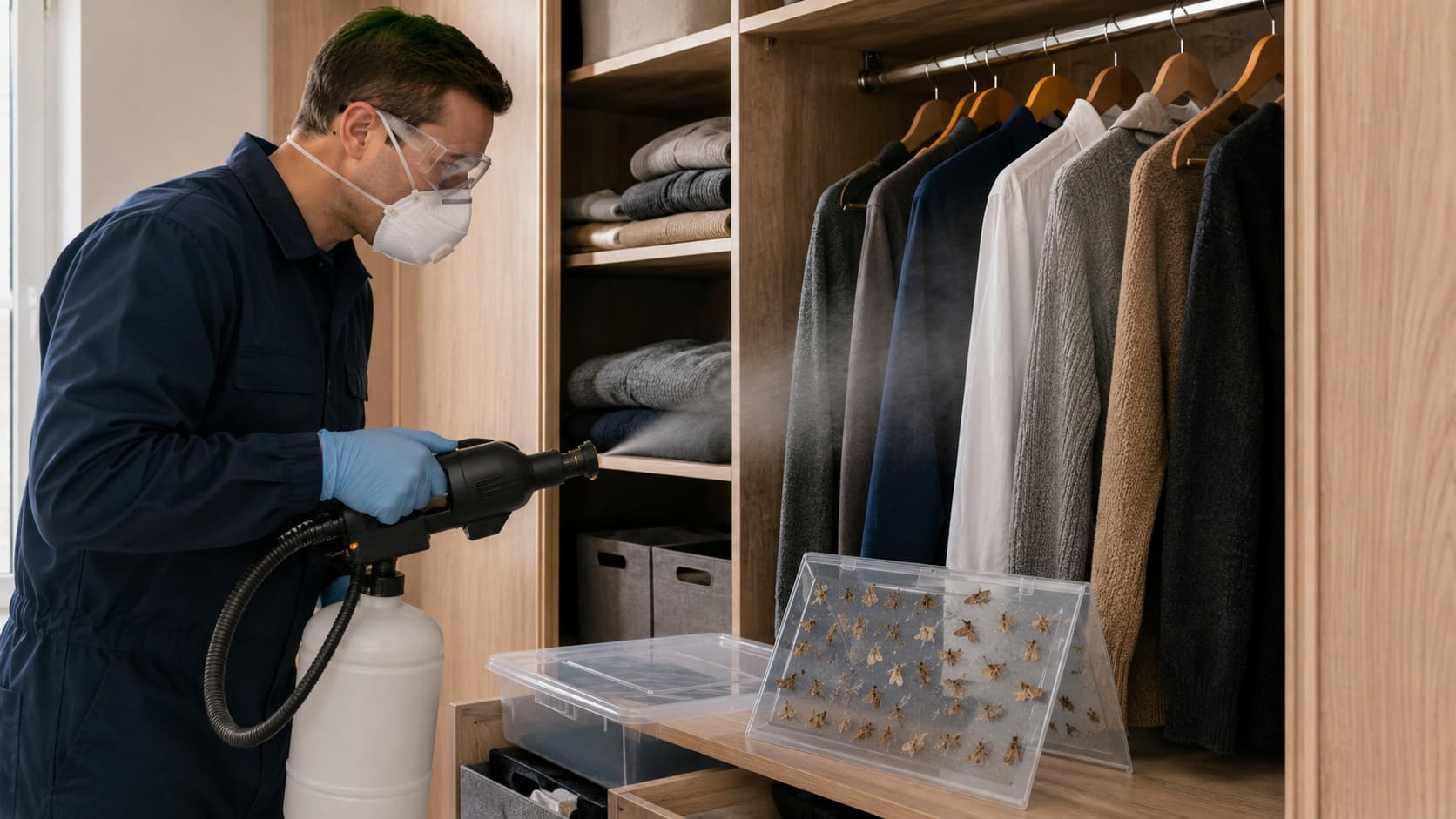
Moth Control Service in Findlay, OH (2026)
Moths cause damage in two very different ways, with clothes moths chewing through wool sweaters and stored fabrics while pantry moths contaminate flour, cereal, and other dry goods. If you are searching for a moth control service in Findlay, licensed local technicians can identify which type of moth is affecting your home and apply treatment targeted to its specific breeding habits. Findlay residents can compare vetted moth control providers through the Findlay, OH pest control directory, which lists licensed exterminators experienced in both fabric and pantry pest treatments.
Why Moths Become a Problem in Findlay Homes
Moths thrive in undisturbed areas like closets, dressers, and pantries where their larvae can feed without interruption for weeks. Clothes moth larvae are drawn to natural fibers like wool, silk, and fur, often left in storage boxes or rarely worn garments, while pantry moths enter homes through infested grain products, cereal, or pet food purchased from the store. Because moth eggs and larvae are small and hidden, an infestation is often well established by the time adult moths are noticed flying around a room.
Types of Moths Found in Findlay Homes
Clothes Moths
Small, tan colored moths that avoid light, clothes moths lay eggs on natural fiber fabrics, and it is the larvae, not the adults, that cause fabric damage.
Pantry Moths
Also called Indian meal moths, these tan and bronze colored moths infest dry food products and are often introduced through contaminated grocery items.
What a Moth Treatment Includes
A professional moth treatment begins with an inspection to identify the moth type and locate infested items, whether in closets, dressers, or pantry shelves. Technicians then recommend removal or treatment of infested fabrics and food items, followed by targeted treatment of cracks, corners, and storage areas where eggs and larvae may remain. Pheromone traps are often placed to monitor and reduce the adult population while the underlying source is addressed.
Prevention Tips Between Treatments
Storing wool and other natural fiber clothing in sealed bins or cedar-lined storage reduces the chance of clothes moths laying eggs on fabrics. Inspecting dry goods for signs of webbing or larvae before storing them in pantry cabinets helps catch pantry moth introductions early. Regularly vacuuming closets, dresser drawers, and pantry shelves removes eggs and larvae before they mature into a larger infestation.
Choosing a Moth Control Provider in Findlay
Look for a company licensed in Ohio with experience distinguishing between clothes moths and pantry moths, since treatment locations and methods differ significantly between the two. Ask whether pheromone traps are included as part of the service and confirm what preparation, such as removing infested items, is needed before treatment.
Frequently Asked Questions
How do I know if I have clothes moths or pantry moths?
Clothes moths are typically found near closets and dressers and target fabrics, while pantry moths appear near kitchen cabinets and food storage areas, often accompanied by webbing inside cereal or grain containers.
Can I get rid of pantry moths by just throwing away infested food?
Removing infested food is an important first step, but eggs and larvae can remain in cabinet cracks and crevices, so a thorough cleaning and treatment of storage areas is usually needed to fully resolve the issue.
How long does moth treatment take to work?
Most moth infestations show noticeable improvement within one to two weeks after treatment and removal of infested items, though pheromone traps may continue catching adult moths for several weeks as the population declines.