
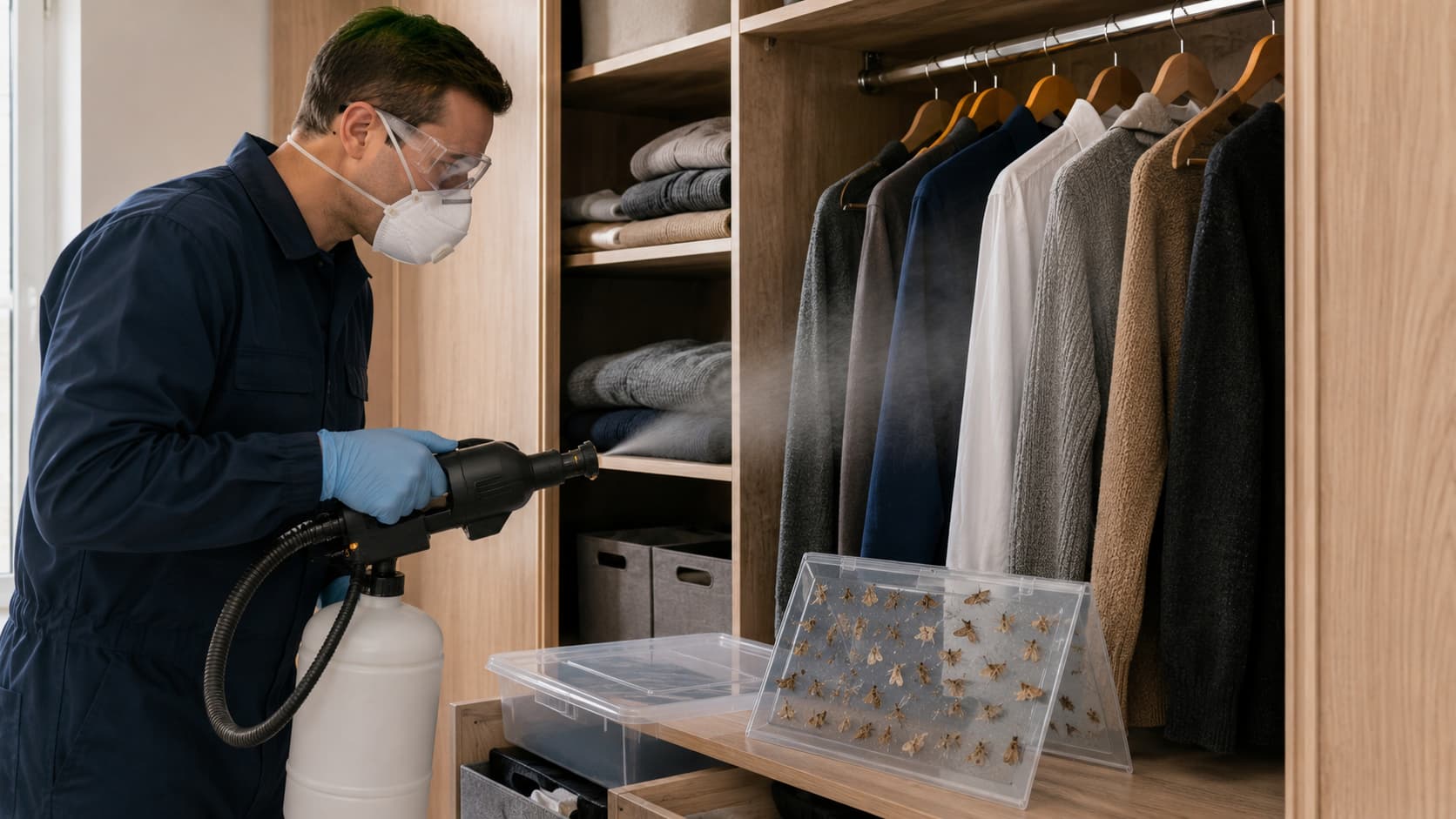
Moth Control Service in Newark, OH (2026)
Moths are often dismissed as a minor nuisance, but pantry moths and clothes moths can quietly damage stored food, wool, and fabric before homeowners notice a problem. Once established, moth infestations spread fast through larvae hidden in cracks, closets, and food packaging. A qualified moth control service in Newark identifies the moth species involved, removes larvae and eggs, and treats the areas where infestations start. To compare licensed providers near you, you can find a moth control company in Newark before scheduling an inspection.
Newark homes with older pantries, wool clothing storage, or unsealed food containers tend to see more moth activity, especially during warmer months when moth populations grow fastest.
Common Moths Found in Newark Homes
Pantry Moths: Indian meal moths lay eggs in grains, cereal, pet food, and dried goods, often arriving in store-bought packaging.
Clothes Moths: Webbing clothes moths feed on wool, silk, fur, and other natural fibers stored in closets or storage bins.
Case-Bearing Moths: These moths create small silk cases as they feed, often found in carpets, upholstery, or stored fabrics.
Outdoor Moths: Large moth swarms near porch lights are usually not a structural threat but can signal nearby breeding sites.
How Professional Moth Control Works
Inspection and Source Identification
A technician inspects pantries, closets, and storage areas to find larvae, webbing, and egg clusters, then identifies the moth species causing the issue.
Removal of Infested Materials
Contaminated food packages or heavily infested fabrics are typically bagged and removed, since larvae can survive in sealed containers if not properly discarded.
Targeted Treatment
Crack and crevice treatments, along with pheromone traps, help eliminate remaining larvae and monitor for new activity in kitchens and closets.
Prevention Guidance
Technicians often recommend storing dry goods in airtight containers and regularly inspecting wool items, which significantly reduces the chance of reinfestation.
Signs You Need Moth Control
Small holes in wool sweaters, coats, or blankets
Silk webbing or larvae in stored grains or cereal
Adult moths flying near pantries or closets, especially at dusk
Small worm-like larvae found in dry food packaging
A musty smell coming from closets or storage bins
Frequently Asked Questions
How do I know if I have pantry moths or clothes moths?
Pantry moths are found near food storage and fly in a zigzag pattern near kitchens, while clothes moths stay closer to closets and prefer dark, undisturbed fabric storage.
Can moth infestations spread between rooms?
Yes, larvae can travel through cracks and shared storage areas, so infestations in a pantry or closet should be treated quickly before spreading further into the home.
How long does moth control treatment take to work?
Most infestations clear within two to four weeks once contaminated items are removed and treatment is applied, though heavier infestations may need a follow-up visit.